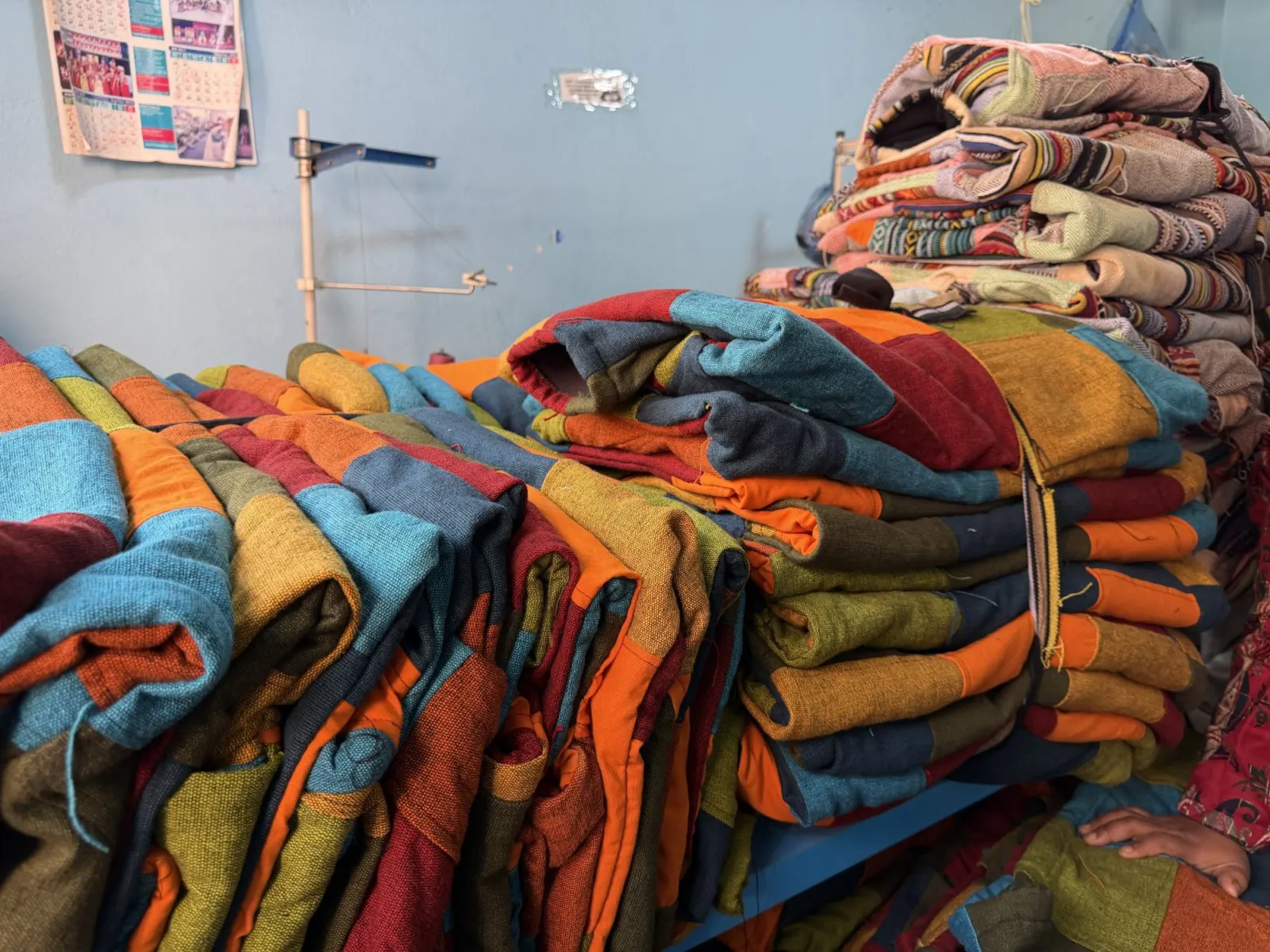
Wholesale Hemp Bags give retailers and independent brands a practical way to add natural-texture accessories to a product range while building a supply relationship closer to the makers. For boutique owners, souvenir retailers, eco-conscious labels, and importers, the right factory partner can support distinctive designs, clear specifications, and repeatable quality. The strongest offer balances a recognizable material story with dependable construction and workable reorder terms.
Why Sustainable Hemp Bags Belong in Your Product Mix
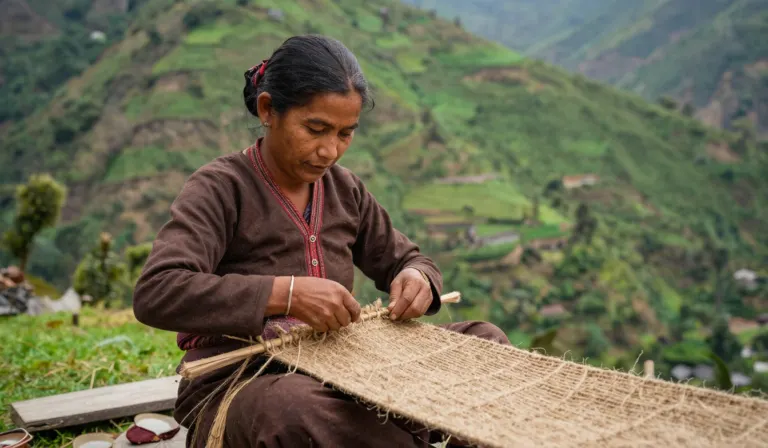
Shoppers increasingly ask where products come from and what they are made of. Hemp bast fibre is plant-based, strong, and traditionally used in textiles and cordage across Nepal’s hill communities. That heritage connects a contemporary accessory with established local craft knowledge.
Hemp fibre can biodegrade under suitable conditions, but a finished bag is not automatically “100% biodegradable.” Polyester thread, synthetic lining, plastic coatings, metal zippers, labels, dyes, and trims can change how the complete product breaks down. Before making environmental claims on a product page or hangtag, ask your supplier for a component list and evidence for each claim. Use precise wording such as “hemp-fibre outer” unless the entire product has been assessed.
Responsible sourcing also means checking fibre origin, processing, and documentation. See [External Link: Global Organic Textile Standard (GOTS) — official standard and certification scope] for textile-processing criteria; only make a GOTS claim when valid certification covers the product and supply chain.
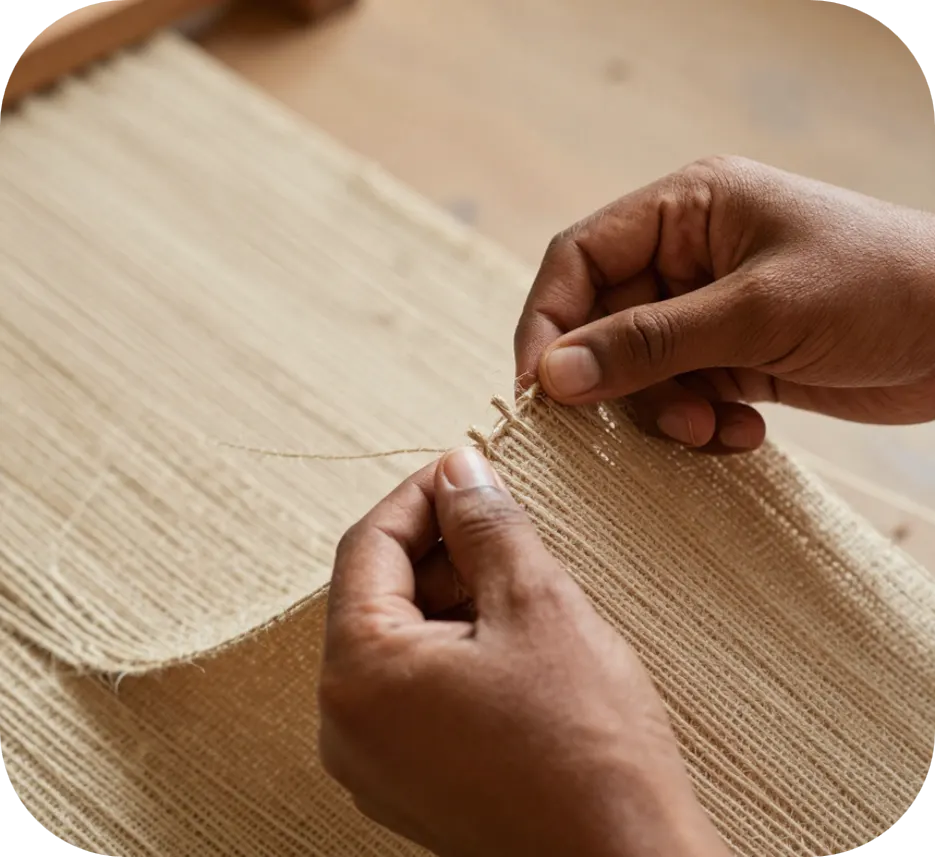
7 Benefits of Sourcing Wholesale Hemp Bags Direct from Kathmandu
Sourcing directly from the workshop puts buyers closer to the people making their products. For small retailers, that can matter as much as unit price.
1. A Clearer Route to Factory Pricing
Fewer trading layers can make pricing easier to discuss. When comparing Wholesale Hemp Bags, request a quote against a clear specification, comparing fabric weight, lining, hardware, branding, packaging, lead time, and freight—not unit price alone. Ask whether sampling and setup charges are one-time costs or repeat on each order.
2. Closer Quality Control
Agree on measurements, seams, handle strength, closures, and tolerances before production. Request a pre-production sample and a written checklist so repeat orders can be compared consistently.
3. Flexible Order Quantities
Independent boutiques often need a smaller test run before scaling. At Hemp Headquarter, selected styles start at a minimum order quantity (MOQ) of 10 pieces, subject to design, material, and customization requirements. Confirm each SKU’s MOQ before ordering.
4. Custom Products That Fit Your Customer
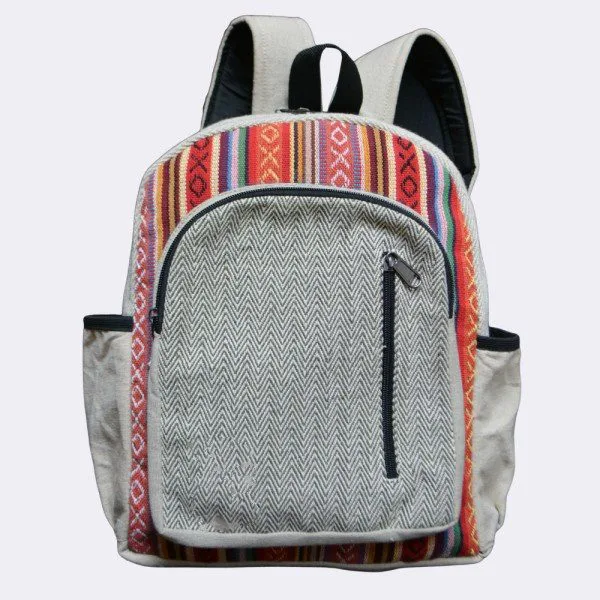
Select totes, shoulder bags, backpacks, pouches, or accessories, then refine dimensions, pockets, straps, closures, and colours to suit your customers and price point.
5. Easier Communication with the Makers
Discuss feasibility, sample changes, and production questions with the team responsible for the work. Share a sketch, reference image, dimensions, or sample to reduce avoidable changes.
6. A Distinctive Nepal-Made Story
7. A Partner for Repeat Orders
A dependable supplier records approved patterns, colours, logos, and quality requirements, confirms material availability, and flags changes before reorders. Ask whether the same material and hardware can be reserved for future runs, or whether seasonal availability could affect consistency.
Inside the Kathmandu Workshop: How Hemp Bags Are Made
A transparent workflow shows buyers where quality is built and where checks can be agreed. A typical order moves through four stages.
Fabric Sourcing and Preparation
The workshop confirms fabric type, weight, colour, and usable width. Ask whether it is locally sourced, imported, blended, or finished; “Himalayan hemp” should refer to a traceable origin, not just a visual style.
Precision Cutting
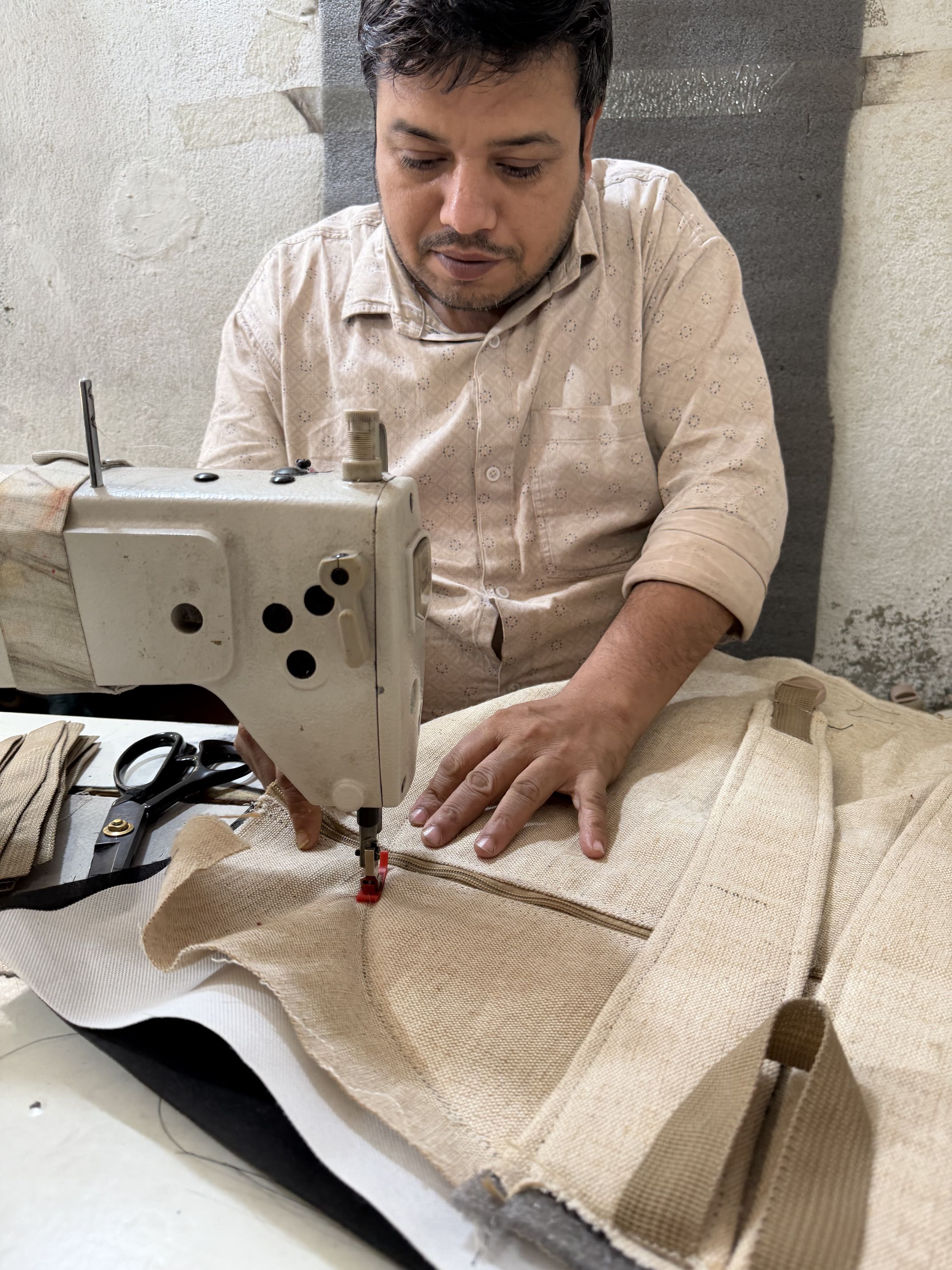
Patterns are laid out to use fabric efficiently and preserve the weave. Accurate cutting helps prevent uneven seams, distorted shapes, and size variation; production sheets should record measurements and tolerances.
Stitching and Assembly
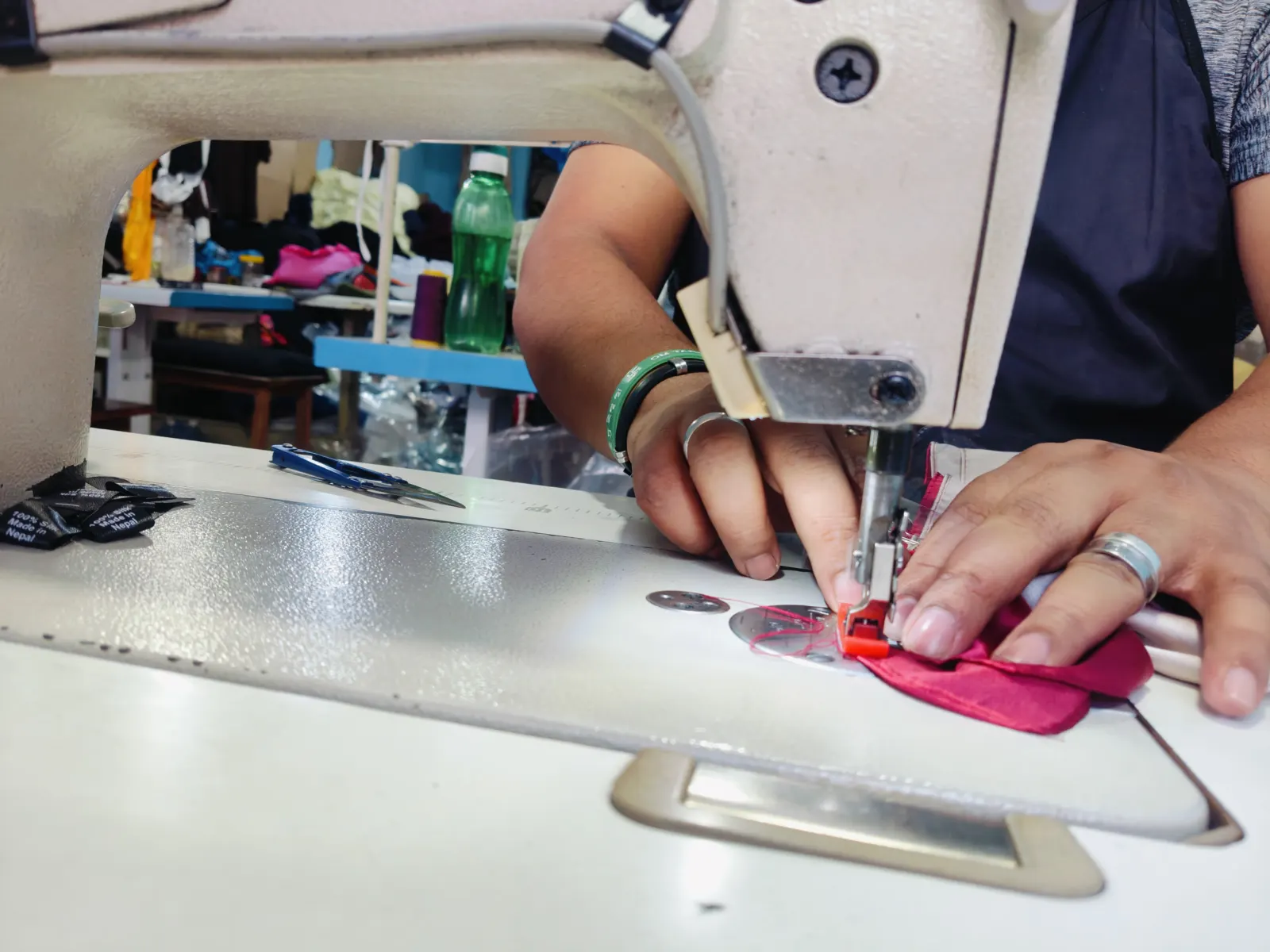
Panels are assembled with attention to seam strength, handles, lining, pockets, and closures. A promotional tote and a daily-use backpack need different reinforcement, so specify details during sampling.
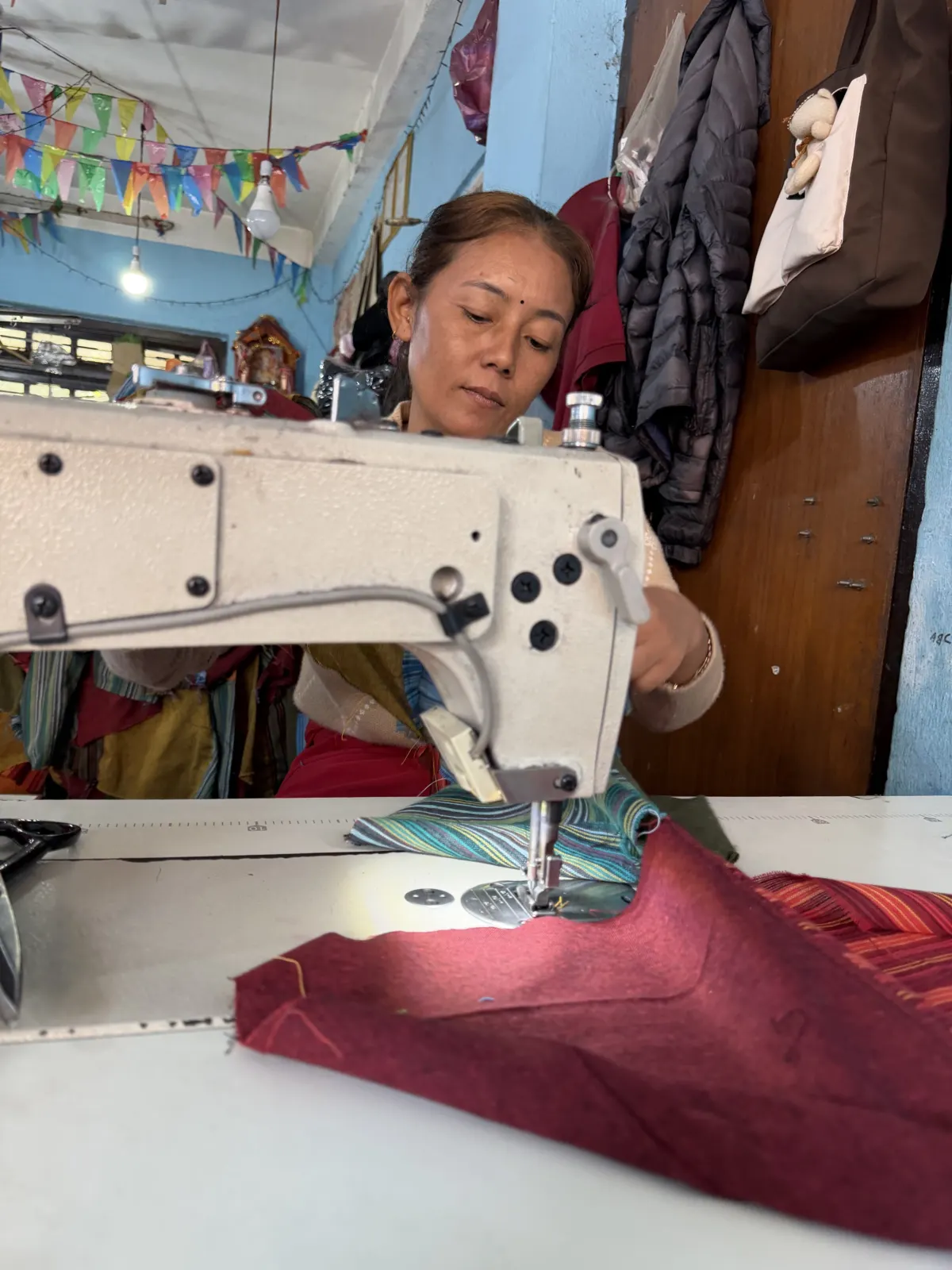
Quality Inspection and Packing
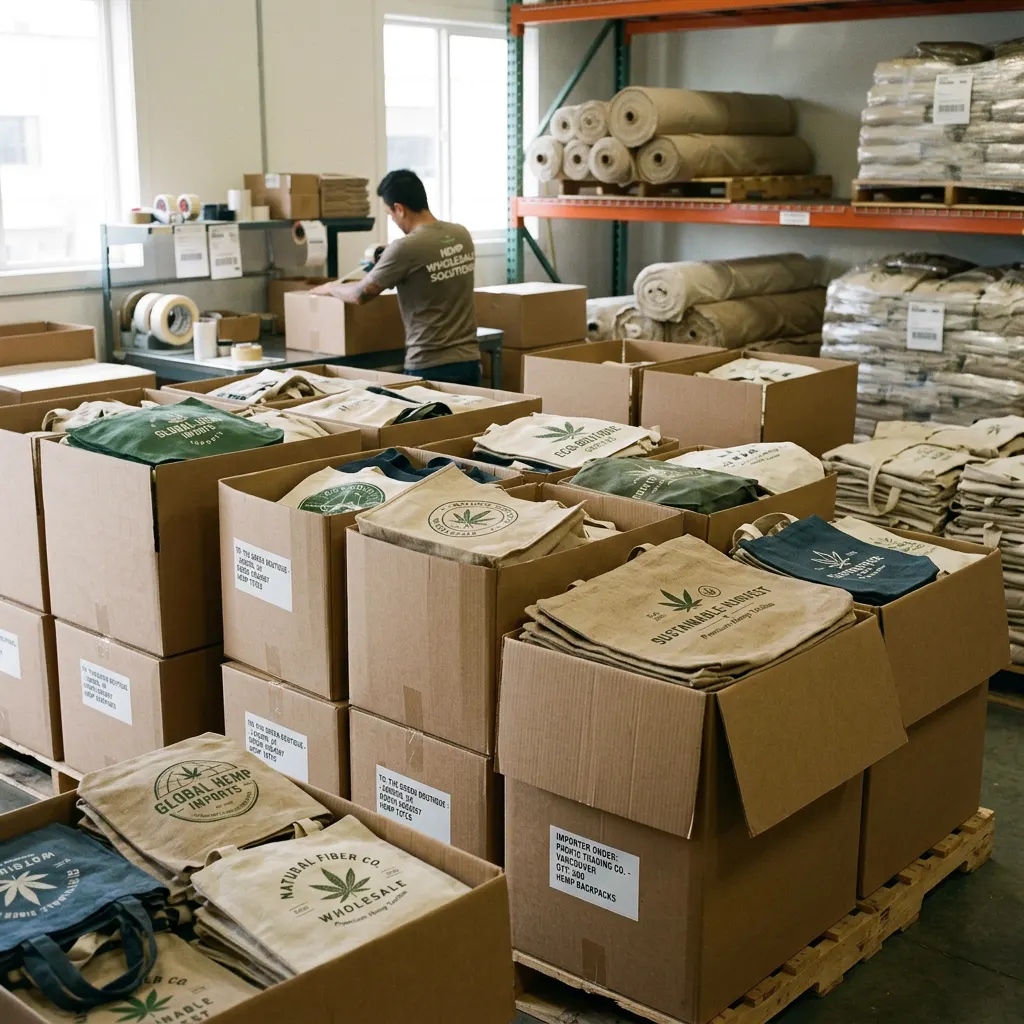
Check dimensions, stitching, loose threads, logo placement, stains, zipper function, and finish against the approved sample. Confirm whether inspection is piece-by-piece or sample-based, and agree how defects will be handled.
Final Pre-Dispatch Checks
Ask for a final count by style and colour, clear carton markings, and packing details before dispatch. For international orders, confirm carton dimensions and gross weight early; these details help your freight provider estimate transport costs accurately.
Custom Branding, White-Labeling, and Low-MOQ Orders
Your product should reflect your brand. Depending on design and quantity, options may include woven labels, printed logos, patches, embroidery, hangtags, branded packaging, or a private-label finish. Confirm logo artwork, placement, size, colours, and spelling in writing before the sample is approved.
White-label production lets a retailer launch a coordinated range without operating a workshop. Supply a vector logo where possible, specify placement and size, and approve a mock-up or sample. The method depends on fabric, artwork, and durability requirements. Keep the approved artwork file and sample reference with your purchase order to reduce errors on a reorder.
Selected styles have a 10-piece MOQ, useful for testing a design before scaling. Special fabrics, custom colours, complex artwork, or made-to-order patterns may require higher minimums. Ask for a quote that separates unit cost, sampling, branding, packaging, and shipping.
Explore the range before requesting a sample:
How to Prepare a Wholesale Enquiry
A useful Wholesale Hemp Bags enquiry gives the factory enough detail to assess cost and feasibility. Share product type, quantity, dimensions, fabric or colour, lining, hardware, branding, destination, and target delivery date.
Attach a photo or sketch and identify essential details. Confirm sample and production timelines, payment terms, packing, shipping, export documents, customs clearance, duties, and local taxes.
Before paying a deposit, approve the sample or specification and ensure the purchase order matches it. Agree on how substitutions, delays, and defects will be communicated.
Start Your Wholesale Hemp Bags Order with Hemp Headquarter
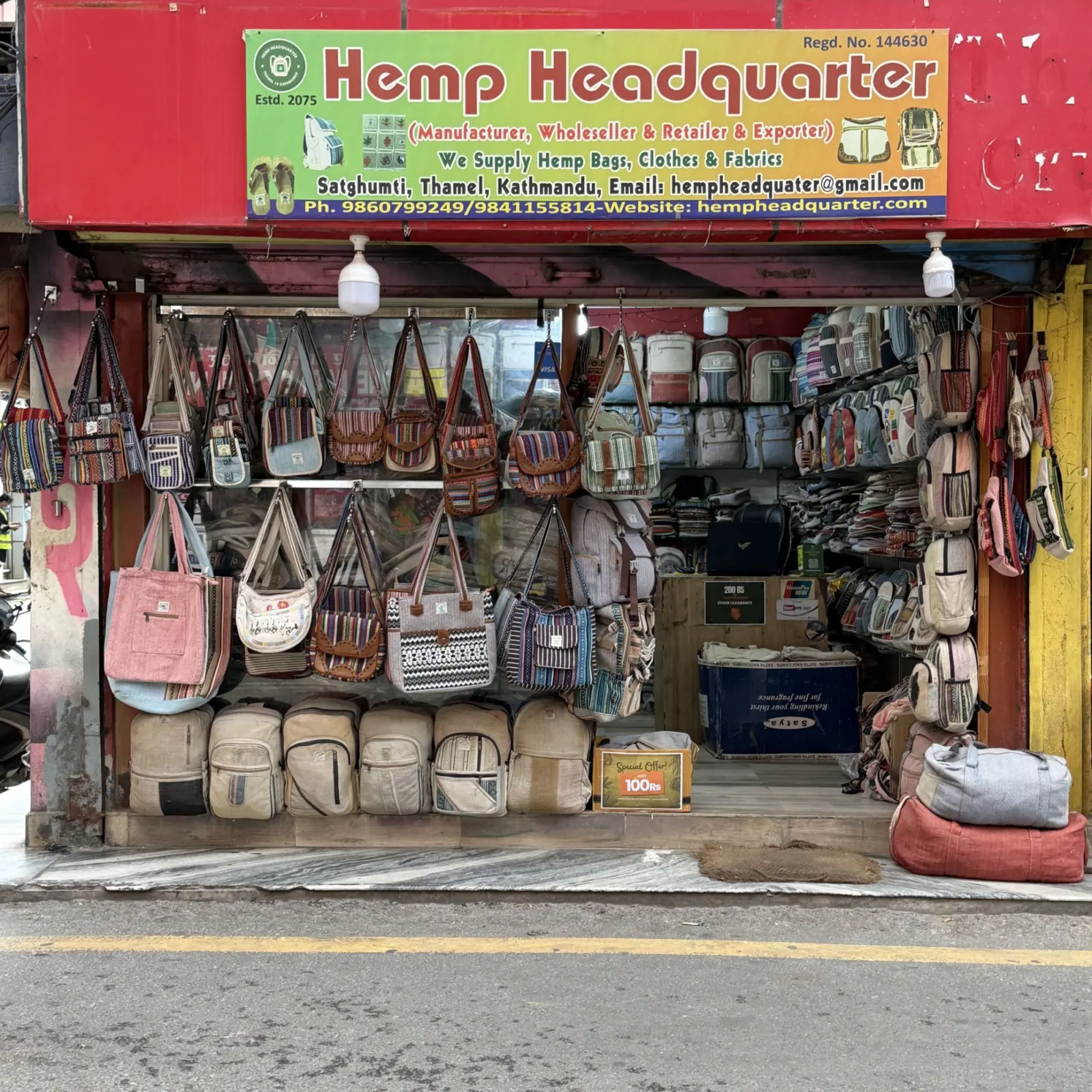
Hemp Headquarter is a Kathmandu-based, factory-direct maker of handmade hemp bags and accessories for retailers, brands, souvenir shops, and B2B importers. Buyers can discuss products, construction, branding, and quantities directly with the maker.
Share your requirements to review style options, available materials, private-label possibilities, MOQ, and lead time for each item.
Ready to source Wholesale Hemp Bags? Request the wholesale PDF catalogue or contact Hemp Headquarter via WhatsApp with your product interests, quantity, and destination. Start with a clear brief, review the specifications, and build a collection your customers can feel good about carrying.
- Wholesale Hemp Bags: 7 Proven Benefits of High-Quality Factory-Direct Supply
- Hemp vs Cotton vs Jute
- How a Hemp Bag Is Made in Kathmandu
- Wholesale Hemp Bags from Nepal: A Buyer’s Guide
- 7 Incredible Reasons Sustainable Hemp is the Future